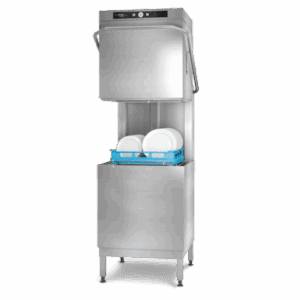
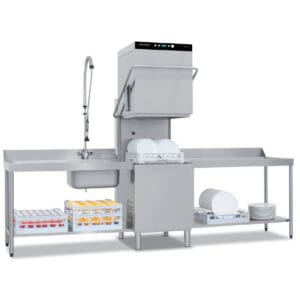
A pass-through, or hood-type, dishwasher lifts a hood so a rack of soiled ware slides in from one side and out to the clean side. That layout is what separates dirty and clean sides of a wash-up and keeps a restaurant, hotel, function venue or aged care kitchen moving through a rush.
Brands here include Hobart, Meiko, Winterhalter, Eswood, Classeq and Comenda, in straight-through and corner-operation layouts. Options across the range include automatic hood operation, heat recovery, condensing hoods, drain pumps and reverse-osmosis rinse. For smaller sites see undercounter dishwashers; for pots and trays see utensil washers.
Both showrooms are open to the public — Brisbane (Springwood) and Gold Coast (Bundall). Ring 1300 CKC 000 and we will tell you what is on the display floor. SilverChef equipment finance is available on eligible equipment.
Showing 1–16 of 53 resultsSorted by popularity

Pass-Through Dishwashers

Pass-Through Dishwashers
Pass-Through Dishwashers
Pass-Through Dishwashers

Pass-Through Dishwashers
Pass-Through Dishwashers
Pass-Through Dishwashers
Pass-Through Dishwashers
Pass-Through Dishwashers
Pass-Through Dishwashers
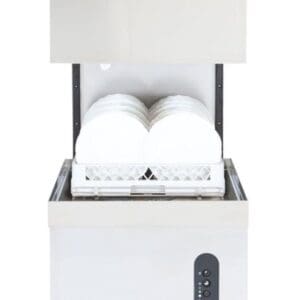
Pass-Through Dishwashers
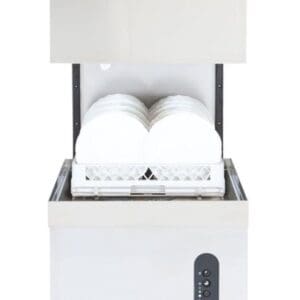
Pass-Through Dishwashers
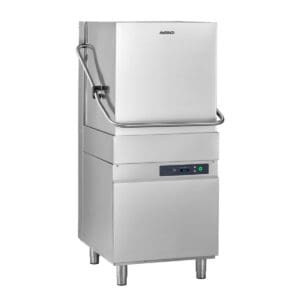
Pass-Through Dishwashers
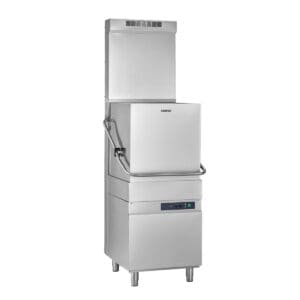
Pass-Through Dishwashers
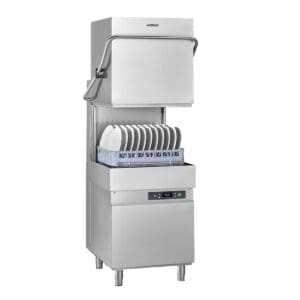
Pass-Through Dishwashers
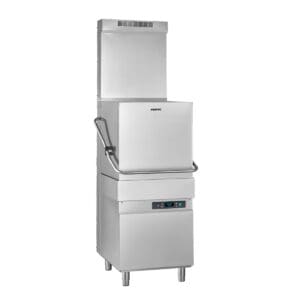
Pass-Through Dishwashers
A pass-through dishwasher is a fixed part of the wash-up, so it has to be chosen alongside the benches, the extraction and the drainage — not after them. The questions that decide it are throughput at peak, what physically fits through the chamber, and how you deal with the steam.
Manufacturers rate these machines in racks per hour, and single-chamber hood machines here sit around seventy racks an hour. Two-level machines, which wash glass, dish and utensil loads in separate chambers, are rated considerably higher. Racks per hour is a nominal figure on the shortest cycle, so read the secondary ratings that better brands publish alongside it — plates per hour, glasses per hour, trays per hour — and compare on the one that matches what you actually wash. If your peak needs continuous flow rather than batches, the answer is a rack conveyor, not a bigger hood machine; see rack conveyors.
Most hood machines take the same standard square rack, so chamber width is rarely the constraint — clear entry height is. It varies widely across this range, and it is what decides whether tall stockpots, gastronorm containers and baking sheets go through the machine or get washed by hand. Measure the tallest item you need to wash and check it against the published clear entry height. Wider double-rack chambers take two racks side by side, or one oversized container, which is a different way of buying throughput.
Most machines here can be installed for straight-through operation, with tabling either side, or for corner operation where the clean side turns ninety degrees. Corner layouts recover floor space in a tight wash-up but fix the direction of travel, so settle this at the drawing stage with the tabling, the pre-rinse spray and the drainage all on the same plan.
Basic machines use a counterbalanced hood the operator lifts. Auto-start models begin the cycle when the hood is lowered, and the automatic machines detect the rack, close the hood themselves and reopen it when the cycle ends. The benefit is not only speed — a hood that lifts on its own stops staff opening a machine mid-cycle, which is the usual cause of a rewash.
A hood machine releases a cloud of steam the moment it opens, which is why extraction over the wash-up is normally part of the job. Three things change that. Heat recovery draws the vapour back into the incoming cold water. A condensing hood does the same on top of the machine and can remove the need for a separate extraction canopy in some installations. Vapour-stop systems hold the steam inside until it has condensed before the hood opens. All three cut the humidity in the wash-up as well as the energy bill, and all three need confirming against your ventilation design rather than assumed.
Compare machines on the fresh rinse water each uses per cycle, which manufacturers publish; eco and steam rinse programmes on the better units cut it materially. Detergent and rinse aid dose automatically through built-in pumps, with refill signals on higher-specified machines. Most units run a self-cleaning programme at shutdown, and display wash and rinse temperatures for HACCP recording. Reverse-osmosis and deionising options give a spot-free finish without hand-polishing. Check WaterMark certification and backflow prevention before the plumber arrives.
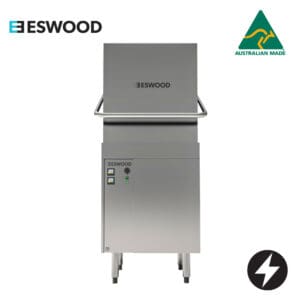
Hobart covers this category broadly, with wide-body and twin chambers, vapour-stop models and a two-level machine that handles glass, dish and utensil loads. Winterhalter covers the range in standard and heat-recovery form with touch-screen control and a hygiene logbook. Meiko is German-made and offers automatic hood operation with basket detection, plus reverse-osmosis and self-venting canopy options. Eswood is Australian-engineered, with drain-pump and condenser-hood variants. Classeq is UK-made and suits straight or corner installation. Comenda offers heat recovery with a condensing hood.
Our team has 35 years specifying warewashing into hotels, restaurants, function venues, clubs, aged care and schools across Queensland and Australia. Both showrooms are open to the public — Brisbane (Springwood) and Gold Coast (Bundall). Ring first on 1300 CKC 000 and we will tell you what is on the display floor, so you can look at rack size, entry height and controls in person. SilverChef equipment finance is available on eligible equipment, and delivery, installation arrangement, plumbing, drainage and electrical connection can be quoted alongside the machine.
Operations washing 500+ items per shift need pass-through capacity — undercounter units (40-60 racks/hr max) become bottlenecks. Pass-through dishwashers handle 60-120 racks/hr, dramatically reducing labour cost and ensuring service-time consistency. Restaurants serving 100+ covers per service, hotels, function venues, and aged care facilities typically require pass-through capacity.
Modern pass-through dishwashers use 2-4 litres per rack for both wash and rinse phases. Older or budget units use 6-10L per rack. For a high-volume operation washing 60 racks per hour over a 6-hour service, that's a difference of 720-2,500L of water per day — significant cost difference over a year.
Australian standards require commercial dishwashers to sanitise at 82°C or higher during the final rinse cycle — kills food safety pathogens. Most commercial units pre-heat wash water to 60-65°C and use boosters to deliver 82°C rinse water. Chemical sanitising systems (lower temperature, sanitiser injection) are an alternative for energy-conscious operations.
Pass-through (hood-type) dishwashers process one rack at a time with manual loading/unloading — 60-120 racks/hr capacity. Conveyor dishwashers (rack-conveyor or flight-type) automate the entire process with continuous belt feeding — 150-400+ racks/hr. Conveyor units cost 3-5x more but deliver unmatched throughput for large hotels and central kitchens.
Pass-through dishwashers require hot water supply (60-65°C), cold water supply for booster, drain connection (200mm minimum), and 3-phase electrical (typically 32-40A). Many units also include detergent and rinse-aid auto-dosing systems requiring chemical supply lines. Always engage qualified trades for installation — DIY installation typically voids warranty.
Yes — Commercial Kitchen Company partners with SilverChef for Rent-Try-Buy, lease, and hire purchase on every pass-through dishwasher in our range. SilverChef offers weekly payment plans designed around hospitality cash flow. Quote finance alongside delivery, installation arrangement, plumbing, and electrical connection in a single package.

Commercial Kitchen Company is the go-to source for high-quality hospitality supplies and equipment in Australia. As a proud, Australian-owned business, we cater to a diverse range of hospitality needs, including restaurants, cafes, catering services, and hotels in Brisbane and the Gold Coast. Our extensive selection in our showrooms highlights everything from advanced commercial kitchen equipment to essential front-of-house products, all aimed at enhancing the efficiency and appeal of your business.