A blast chiller pulls hot food through the danger zone far faster than a fridge can, which is what makes cook-chill, batch production and safe next-day service possible. Commercial Kitchen Company supplies one of Australia’s largest ranges of blast chillers and shock freezers — from compact bench and undercounter cabinets for restaurants through to floor-standing and roll-in trolley models for production kitchens.
The range covers Zanussi, Williams, Irinox, Everlasting and Technomac, and our Brisbane and Gold Coast showrooms have working units, so you can compare cycle programs, tray and GN 1/1 capacity, probe monitoring and controls before you commit.
Browse the range below, or read the buying guide for capacity and power advice. SilverChef finance is available. Call 1300 CKC 000 or request a quote.
Showing 1–16 of 41 resultsSorted by popularity
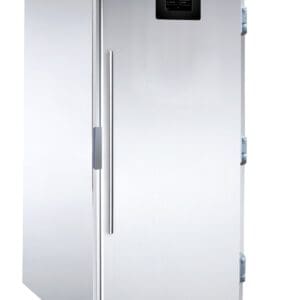
Blast Chillers
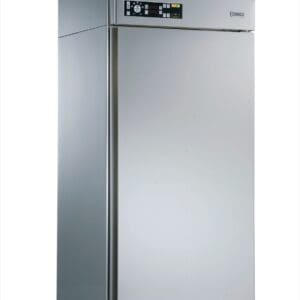
Blast Chillers, Commercial Freezers
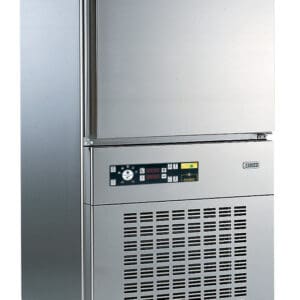
Blast Chillers, Commercial Freezers
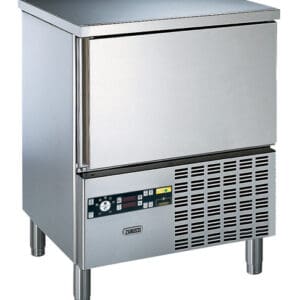
Blast Chillers, Commercial Freezers
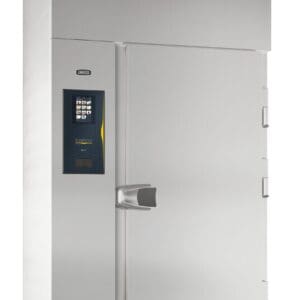
Blast Chillers
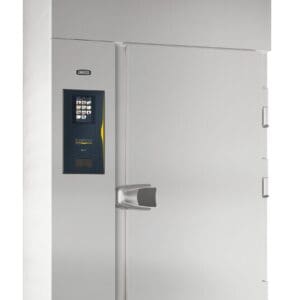
Blast Chillers
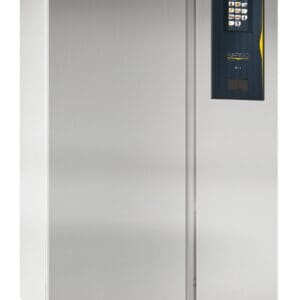
Blast Chillers
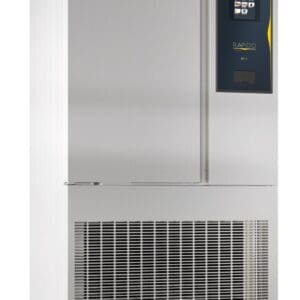
Blast Chillers
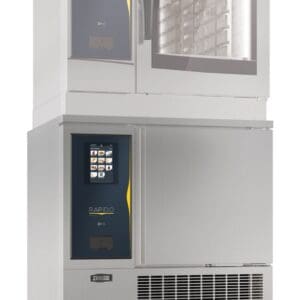
Blast Chillers
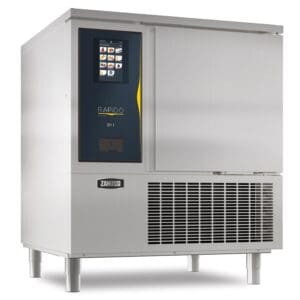
Blast Chillers
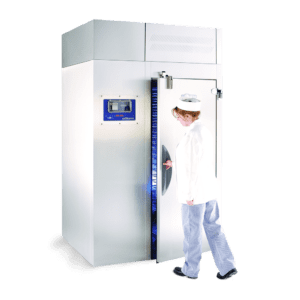
Blast Chillers, Commercial Freezers
Blast Chillers
Blast Chillers, Commercial Freezers
Blast Chillers
Blast Chillers, Commercial Freezers
Blast Chillers, Commercial Freezers
A blast chiller is a food-safety investment first and a productivity one second. It lets you cook ahead, hold quality and document cooling for HACCP — provided the cabinet is matched to how much you actually need to chill in one hit.
A blast chill cycle takes cooked food down to around 3°C quickly enough to skip the slow-cooling window where bacteria multiply, adding usable days of fridge life without ice crystal damage. A shock-freeze cycle carries on to about -18°C, freezing fast enough to preserve cell structure so the product thaws without collapsing. Many cabinets run both, which is worth specifying if you freeze anything you also intend to plate. Cycle times vary with load and food density, so check them against the model you are considering.
Blast chillers are rated by tray or GN 1/1 pan count and by kilograms of product per cycle, and the two do not always move together — dense product chills slower than shallow trays of the same weight. Size on your largest single production run, not your daily total, because the cycle is the bottleneck. Compact bench and undercounter cabinets suit à la carte restaurants and cafés; floor-standing cabinets suit hotels, banquet operations and central kitchens; roll-in models take a full mobile trolley and are built for production bakeries and large-scale catering.
A core temperature probe is the difference between a blast chiller and a very cold cupboard — it ends the cycle on the food’s actual core temperature rather than a timer, which is what makes the cooling record defensible under HACCP. Multi-point probes help with mixed loads. Programmable cycles matter if you chill both delicate items and dense roasts, since a hard cycle will surface-freeze a sauce.
Blast chillers draw hard during a cycle rather than steadily, and the supply they need scales with cabinet size — a small bench unit and a roll-in are not remotely the same electrical job. Get the spec sheet for the exact model and put it in front of your electrician before you commit. On larger floor and roll-in cabinets, have switchboard capacity checked early: it is the most common cause of a delayed installation. Allow for condenser airflow and, on larger cabinets, drainage.
Zanussi covers the Crosswise and Rapido chillers and chiller-freezers. Williams spans tray cabinets through to roll-in models. Irinox brings the EasyFresh Next combined blast chillers and shock freezers. Everlasting and Technomac round out the range. Each has particular strengths for different applications — the showrooms are the fastest way to compare them side by side.
Our team has 35 years specifying blast chillers into restaurants, hotels, bakeries, banquet operations, aged care facilities and central kitchens across Queensland and Australia. Both the Brisbane and Gold Coast showrooms have working units. SilverChef finance is available, and delivery, installation arrangement, electrical connection and cycle program setup can be quoted alongside the equipment. Call 1300 CKC 000 or request a quote.
A standard fridge is built to hold cold food, not to strip heat out of it, so a deep tray of hot food can sit in the danger zone for hours. The Australian Food Standards Code requires cooked food to be cooled from 60°C to 21°C within two hours, and from 21°C to 5°C within a further four. A blast chiller does the whole job in roughly the time a fridge needs for the first stage — which is why cook-chill kitchens use one. You get compliance headroom instead of a marginal pass, and several extra days of usable shelf life.
Blast chillers cool cooked food to around 3°C — preserving it without freezing damage and adding several days of usable fridge life. Shock freezers take it down to -18°C, freezing fast enough to preserve cellular structure for long-term frozen storage. Many units in our range offer both functions in one cabinet — the Zanussi Crosswise and Rapido chiller-freezers and the Irinox EasyFresh Next series among them — so choose on whether you store chilled, frozen, or both.
Compact models (3-7 trays, or 6 GN1/1 pans, from about 10kg per cycle) suit restaurants and cafés. Standard floor models (10-20 GN pans or trays) fit hotels and banquet operations. Roll-in models take a full mobile trolley and run up to 320kg per cycle — built for production bakeries and large-scale catering. Always size to your peak-batch cool requirement, not average.
It scales with cabinet size, and we don't quote a blanket figure because it genuinely varies by model — a compact 3-tray unit and a 320kg roll-in are completely different electrical jobs. Blast chillers also draw hard during the cycle itself rather than steadily. Ask us for the spec sheet on the model you're considering and have your electrician confirm supply and switchboard capacity before purchase — on the larger floor and roll-in units this is the most common cause of a delayed installation.
No specific piece of equipment is mandated. What is required is the outcome: the Australian Food Standards Code sets a two-stage cooling rule — 60°C down to 21°C within two hours, then to 5°C within a further four. Small batches can often meet that without special equipment; hot, dense or high-volume batches generally cannot, which is why cook-chill operations, aged care, schools, hospitals and catering kitchens run blast chillers. Your local council or state health authority is the authority on what your venue has to demonstrate.
Yes — Commercial Kitchen Company partners with SilverChef for Rent-Try-Buy, lease, and hire purchase on every blast chiller in our range. SilverChef offers weekly payment plans designed around hospitality cash flow. Quote finance alongside delivery, installation arrangement, electrical connection, and HACCP cycle setup in a single package.

Commercial Kitchen Company is the go-to source for high-quality hospitality supplies and equipment in Australia. As a proud, Australian-owned business, we cater to a diverse range of hospitality needs, including restaurants, cafes, catering services, and hotels in Brisbane and the Gold Coast. Our extensive selection in our showrooms highlights everything from advanced commercial kitchen equipment to essential front-of-house products, all aimed at enhancing the efficiency and appeal of your business.