A glasswasher is an undercounter machine set up for glassware — a smaller rack than a dish machine, gentler wash pressure, and a rinse aimed at leaving glasses clear rather than needing a polish. It suits bars, wine venues, clubs and any restaurant turning over a lot of stemware.
Brands here include Hobart, Meiko, Winterhalter, Eswood, Classeq and Comenda. The option that changes the result most is the rinse: several models are available with integrated reverse osmosis or deionisation, which removes the dissolved minerals that leave spots. Heat recovery, drain pumps and digital temperature displays for HACCP recording are widely available.
Both showrooms are open to the public — Brisbane (Springwood) and Gold Coast (Bundall). Ring 1300 CKC 000 and we will tell you what is on the display floor. SilverChef equipment finance is available on eligible equipment.
Showing 1–16 of 30 resultsSorted by popularity
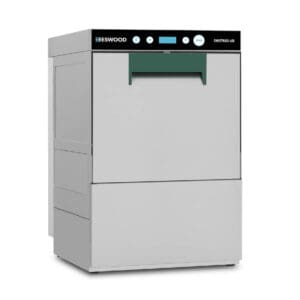
Glasswashers
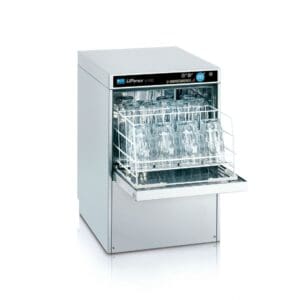
Glasswashers
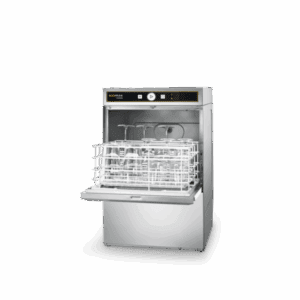
Glasswashers
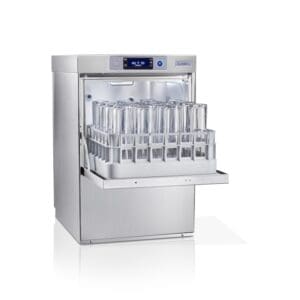
Glasswashers
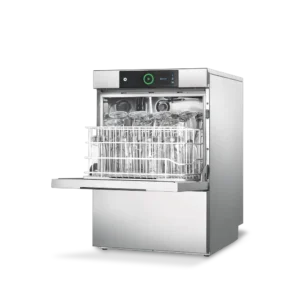
Glasswashers
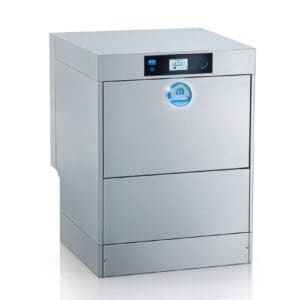
Glasswashers
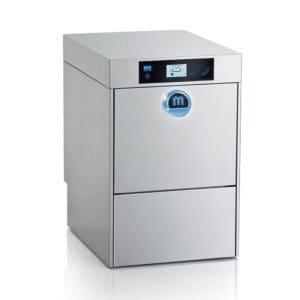
Glasswashers
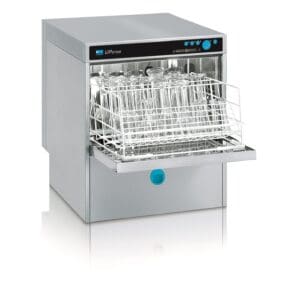
Glasswashers
Glasswashers
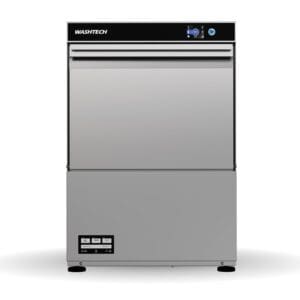
Dishwashers, Glasswashers
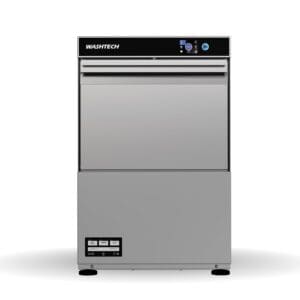
Dishwashers, Glasswashers
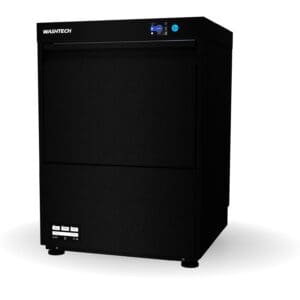
Dishwashers, Glasswashers
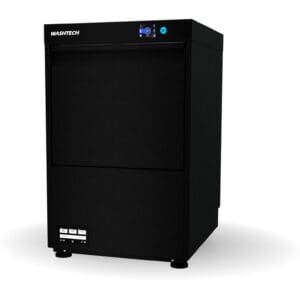
Dishwashers, Glasswashers
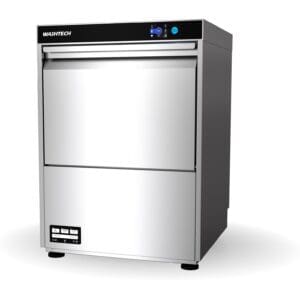
Dishwashers, Glasswashers
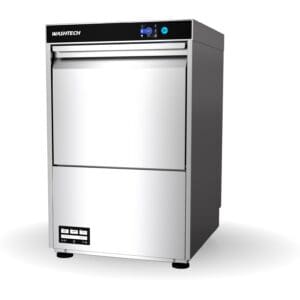
Dishwashers, Glasswashers
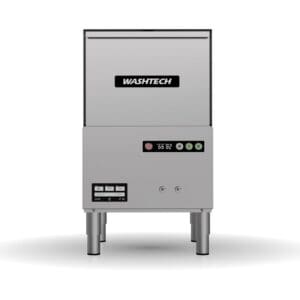
Glasswashers
A glasswasher lives under the bar, runs short cycles all night and is judged on one thing: whether the glass comes out ready to pour into. Rack size, water quality and wash pressure are what decide that.
The honest answer is that the line is not as hard as it is often made out. Several undercounter machines in this range are the same chassis configured as a glasswasher or a dishwasher at installation, and some are sold as both. What genuinely differs is the setup: a glasswasher takes a smaller rack, runs a shorter cycle and, on the better machines, a lower wash pressure so delicate stemware is not knocked about. If glassware is your main volume, buy the glass configuration. If one machine has to do both, ask which models are dual-configurable before you choose — see also undercounter dishwashers.
Glass racks are commonly 400 x 400mm, with some ranges built around a 500mm rack that takes taller and larger glasses. Output is quoted two ways: racks per hour, which tops out around sixty on the machines here, and glasses per hour, which depends entirely on how many of your glasses fit a rack. Work it out with your own glassware rather than the brochure’s — a rack of pint glasses and a rack of champagne flutes are not the same number. Cycle times commonly run from about 60 to 180 seconds, with a longer intensive option for coffee cups and heavily marked glass.
Spotting is a water problem, not a washing problem. Dissolved minerals in the final rinse are left behind as the glass dries, and no amount of extra washing removes them. Two answers are offered here: automatic rinse-aid dosing through a built-in pump, which is standard on nearly everything and takes the result off the operator; and integrated reverse osmosis or deionisation, which strips the minerals out of the rinse water so glasses dry clear with no hand-polishing at all. In hard-water areas the second is the one that ends the argument, and it also protects the machine from scale.
Breakage in a bar is usually thermal or mechanical, not chemical. Machines with an adjustable wash pump let you drop the pressure for delicate stemware and lift it for cups and saucers on the same unit. A soft-start cycle, which brings the pump up gradually rather than at full pressure, stops glasses shifting in the rack at the beginning of a cycle. Both are worth specifying if you carry expensive glassware.
Undercounter glasswashers need a water supply, a drain and a power supply behind the bar, and space to open the door with staff working. A drain pump, fitted as standard on much of this range, lets you place the machine where the bar layout works rather than next to the floor waste. Heat-recovery models cut the energy draw and the heat pushed out under the bar, which matters in a small service area. Look for a double-skinned door and cabinet, which cuts noise in a customer-facing position, and a self-cleaning cycle so the tank is emptied and flushed at close rather than by hand.
Hobart covers front-door glasswashers including compact models and versions with integrated reverse osmosis. Winterhalter builds undercounter glasswashers in standard, heat-recovery and reverse-osmosis form, with touch-screen control and a hygiene logbook. Meiko is German-made and offers adjustable wash pressure and reverse-osmosis rinse. Eswood is Australian-engineered, with digital wash and rinse temperature displays and a drain pump as standard. Classeq is UK-made and configurable as glasswasher or dishwasher. Comenda offers an undercounter glasswasher with a rack that also accepts wire baskets.
Our team has 35 years supplying glasswashers to bars, restaurants, hotels, clubs and licensed venues across Queensland and Australia. Both showrooms are open to the public — Brisbane (Springwood) and Gold Coast (Bundall). Ring first on 1300 CKC 000 and we will tell you what is on the display floor, so you can look at rack size, entry height and controls in person. SilverChef equipment finance is available on eligible equipment, and delivery, installation arrangement, plumbing, drainage and electrical connection can be quoted alongside the machine.
General dishwashers run high-temperature cycles (82°C+) that thermally shock glassware — dramatically shortening glass life and causing premature chipping. Glasswashers run lower temperatures (60-65°C) with specialised rinse aids that preserve glass clarity and prevent water spotting essential for beverage presentation. Using a dishwasher for glasses costs 2-3x more in glass replacement than buying a dedicated glasswasher.
Quality glasswashers complete a full wash and rinse cycle in 90-180 seconds. High-output bar units reach 60-90 second cycles. Speed matters during peak bar service — slow glasswasher cycles cause service bottlenecks. Always specify cycle time matching your peak-shift glass throughput.
Modern glasswashers use 2-3 litres of water per cycle. Older or budget units use 4-6L per cycle. For a busy bar running 40 cycles per hour over a 6-hour service, that's 480-720L per day difference — major cost impact over a year. Specify modern energy-efficient units.
Glasswashers run at 60-65°C — lower than dishwashers (82°C) to preserve glass clarity and prevent thermal shock. Some premium glasswashers use chemical sanitising instead of thermal — even lower temperatures with sanitiser injection. Both approaches meet Australian food safety standards for bar service.
Yes in hard-water areas (most Australian cities have moderate-to-hard water). Hard water causes spotting, scaling on glassware, and premature glasswasher component failure. Built-in water softeners eliminate these issues. Stand-alone water softeners can be retrofitted to existing glasswashers.
Yes — Commercial Kitchen Company partners with SilverChef for Rent-Try-Buy, lease, and hire purchase on every glasswasher. SilverChef offers weekly payment plans designed around hospitality cash flow. Quote finance alongside delivery, installation arrangement, plumbing, and electrical connection in a single package.

Commercial Kitchen Company is the go-to source for high-quality hospitality supplies and equipment in Australia. As a proud, Australian-owned business, we cater to a diverse range of hospitality needs, including restaurants, cafes, catering services, and hotels in Brisbane and the Gold Coast. Our extensive selection in our showrooms highlights everything from advanced commercial kitchen equipment to essential front-of-house products, all aimed at enhancing the efficiency and appeal of your business.