A cold display sells product through visibility while holding it at a safe temperature. Chilled cabinets can be set to 5°C or below, as Australian food safety standards require for cold-held food; gelato and ice-cream showcases are a different class again and run as freezers.
We stock countertop cabinets for café and sandwich-bar counters, floor-standing cases for delicatessens, patisseries and bakeries, and salad benches for make-line work. Brands include Bonvue, Anvil, Woodson, Airex and FED-X. Most models are self-contained, so they need power but no plumbing.
Both showrooms are open to the public — Brisbane (Springwood) and Gold Coast (Bundall). Request a quote, or ask about SilverChef equipment finance. For heated presentation, see hot food displays.
Merchandising finished cakes and patisserie? See the dedicated cake display cabinets range: tiered and flat-deck refrigerated displays from Anvil and Bonvue.
Scooping gelato or ice cream? See the dedicated gelato and ice cream displays range: benchtop showcases to 18-pan scooping cabinets.
Showing 1–16 of 85 resultsSorted by popularity
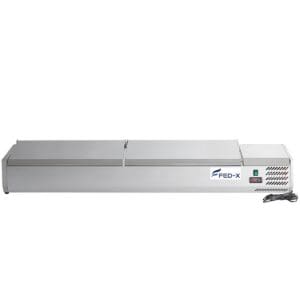
Cold Display
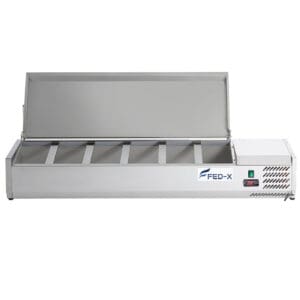
Cold Display
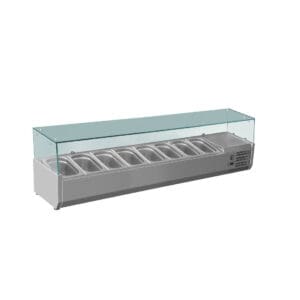
Cold Display
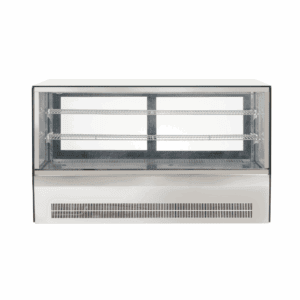
Cold Display
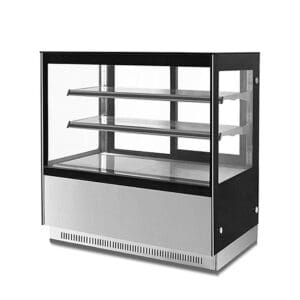
Cake Display Cabinets, Cold Display
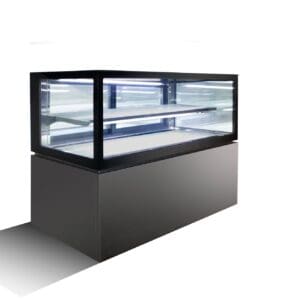
Cake Display Cabinets, Cold Display
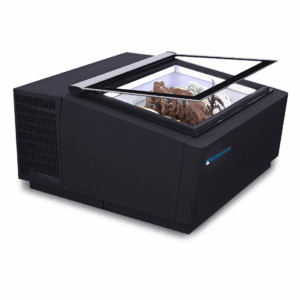
Cold Display, Gelato & Ice Cream Displays
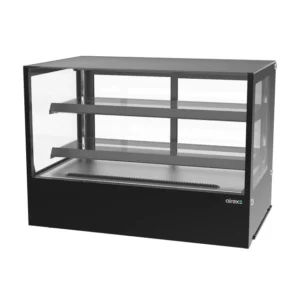
Cold Display
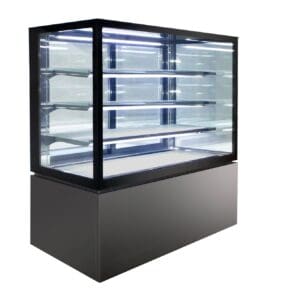
Cake Display Cabinets, Cold Display
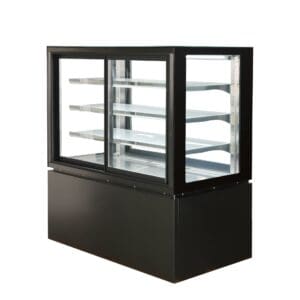
Cake Display Cabinets, Cold Display
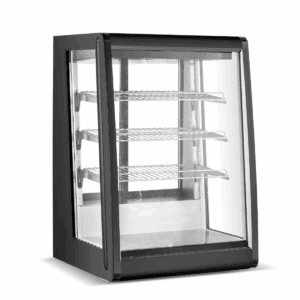
Cold Display
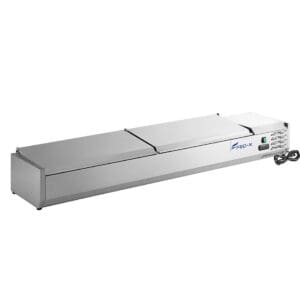
Cold Display
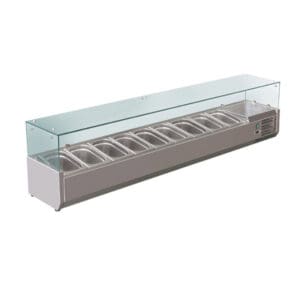
Cold Display
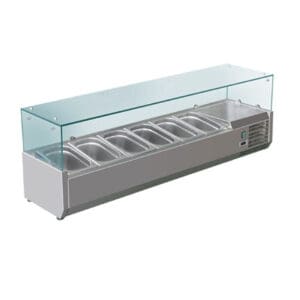
Cold Display
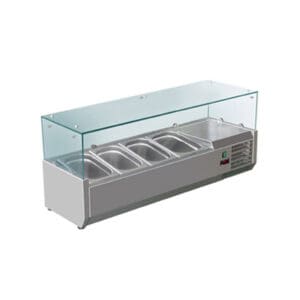
Cold Display
Cold Display
A cold display is both a presentation tool and a refrigeration unit — it sells product through visibility while keeping food at a safe holding temperature. Choose right and the cabinet drives impulse purchases, communicates quality, and supports your food safety records.
Countertop displays sit on an existing counter and suit cafés, sandwich bars and small operations — less capacity, but far easier to position and to move later. Floor-standing cabinets are self-supporting and carry much more product, which is what deli counters, patisseries and bakery cases need. Whichever you choose, match the display height to customer eye level; a cabinet set too low or too high loses most of its selling power.
Square (straight) glass is the dominant format — more usable internal volume, easier to clean, and it lines up neatly in a run of counters. Curved glass gives the strongest visual impact and shows product from more angles, at some cost in internal space. Slanted (angled) front glass presents product at serving height and is the usual choice for deli, meat and seafood cases. Flat glass or a stainless lid is used on salad benches, where the top is a working surface rather than a display window.
Cold displays are rated by internal volume, by cabinet width or by tier count rather than by pan count, so size against those figures rather than converting from Gastronorm. Floor cabinets are usually specified by width, and 900mm, 1200mm, 1500mm and 1800mm are the common steps — measure the counter run before you shortlist. Shelving is typically adjustable across a few display levels, while cake displays are instead built around fixed tiers, commonly 3 tier and 4 tier. Allow for product turnover as well as peak volume: an over-sized cabinet looks sparse and unappetising by mid-afternoon.
Chilled cabinets in this range run a band that can be set to 5°C or below for cold-held food. Gelato and ice-cream showcases sit outside that — they are freezer units and run far colder, so they are not interchangeable with a chilled cabinet. Condensation control matters as much as temperature: heated or anti-fog glass keeps the display readable through a busy service, and it is worth specifying anywhere the cabinet faces a warm, humid room. Check the ambient rating too. A cabinet run in a room hotter than it is rated for will struggle to hold temperature, which is a real consideration in a Queensland kitchen without good airflow across the condenser.
LED shelf lighting is standard on most cabinets and does the heavy lifting on presentation, lifting colour without adding heat to the cabinet. Look at where the lighting sits: per-shelf lighting keeps the lower levels selling, while a single top-mounted lamp leaves the bottom of a tall cabinet in shadow.
Bonvue is the core of this range, spanning chilled counter-top and angled displays, square cake and food displays, refrigerated deli, meat and seafood cases, open chillers and gelato showcases. Anvil covers countertop cold showcases, tiered cake displays, jewellery cake displays, drawer displays and countertop ice-cream displays. Woodson supplies straight and square glass cold food displays in modular widths. Airex supplies countertop and freestanding refrigerated square food displays with frameless double-glazed heated glass. FED-X covers flat-glass and stainless-lid salad benches.
Our team has 35 years specifying cold displays into cafés, patisseries, delis, bakeries, gelato and ice-cream shops and quick-service venues across Queensland and Australia. Both Brisbane and Gold Coast showrooms are open to the public — ring first on 1300 CKC 000 and we will tell you what is on the display floor, so you can compare glass, lighting and shelf flexibility in person. SilverChef equipment finance is available on eligible equipment, and delivery, installation arrangement and electrical connection can be quoted alongside it.
Cold displays prioritise product visibility through glass panels and internal lighting — they sell product as well as store it. Regular commercial fridges have solid doors and prioritise capacity and temperature retention. Cold displays use more energy due to glass surface area but generate impulse purchases that justify the cost.
Australian food safety standards require cold-held food to be kept at 5°C or below. The chilled cabinets in this range are rated 2–8°C across the Anvil, Bonvue, Airex and FED-X models, with the Bonvue chilled counter-top displays at 3–8°C, so you set them below the 5°C mark rather than at the top of the band. Gelato and ice-cream showcases are a separate class — they are freezer units running to around -18°C. Ambient rating matters too: most units here are rated to a 32°C ambient and the FED-X salad benches to 38°C. Always verify with a calibrated thermometer.
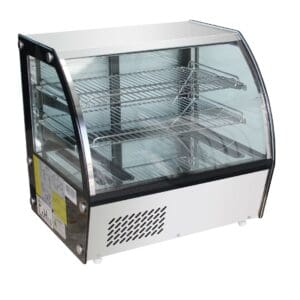
Square (straight) glass offers more usable internal volume and easier cleaning, and it is the dominant format in our range — the Woodson module displays, the Anvil and Bonvue cake and food displays and the Airex square displays are all square-glass. Curved glass maximises visual impact and product visibility from multiple angles; in this range it is fitted to the two Bonvue chilled counter-top displays, HTR120N and HTR160N. There are two more formats worth knowing: slanted front glass on the Bonvue deli, meat and seafood cases, which presents product at serving height, and flat glass or stainless lids on the FED-X salad benches, where the top is a working surface rather than a display window.
Our cold displays are rated by internal volume, width and shelf or tier count rather than by pan count, so size against those. Counter-top units run from about 70L to 285L — the Anvil countertop cold showcases are 140L, 190L and 240L, and the Bonvue chilled counter-top displays 115L and 146L. Floor cabinets are specified by width: 900mm to 1800mm across the Anvil cake displays and Bonvue square displays, 900mm to 1500mm on the Airex freestanding units, and 1200mm to 2000mm on the FED-X salad benches. Woodson cold food displays run 3 to 6 modules, and the cake displays are built around 3 and 4 tiers. Always match capacity to peak-day volume — overstocked displays look messy, understocked ones look sparse and unappetising.
Cold displays use more energy than an equivalent solid-door fridge — glass surface area, internal lighting, and on several models heated anti-fog glass all add load. Actual running cost depends on cabinet size, ambient temperature and how often the doors are opened, so we would rather give you the rated power draw for the model you are considering than a generic figure: ask us and your electrician can cost it against your tariff. One practical note — most units in this range are rated to a 32°C ambient, and a cabinet running hotter than its rating works harder and costs more. The energy cost is generally justified by impulse-purchase revenue in retail food settings.
Yes — Commercial Kitchen Company partners with SilverChef for lease and equipment finance on eligible equipment. SilverChef offers weekly payment plans designed around hospitality cash flow. Tell us which cabinet you are after when you request a quote and we will confirm what applies, and quote finance alongside delivery, installation arrangement, and electrical connection in a single package.

Commercial Kitchen Company is the go-to source for high-quality hospitality supplies and equipment in Australia. As a proud, Australian-owned business, we cater to a diverse range of hospitality needs, including restaurants, cafes, catering services, and hotels in Brisbane and the Gold Coast. Our extensive selection in our showrooms highlights everything from advanced commercial kitchen equipment to essential front-of-house products, all aimed at enhancing the efficiency and appeal of your business.