A utensil washer, or pot washer, is a large-chamber machine for the things that will not go through a dishwasher — stockpots, mixing bowls, gastronorm containers, baking sheets, transport crates and bulk kitchen tools. It suits banquet and function kitchens, bakeries, hospitals, aged care and central production kitchens.
Brands here are Hobart, Meiko and Winterhalter, in single-chamber and twin-chamber front-door builds and a pass-through version, with heat recovery available across the range. The specification that decides the purchase is the usable chamber and clear entry height, so measure your largest pot or tray first.
Both showrooms are open to the public — Brisbane (Springwood) and Gold Coast (Bundall). Ring 1300 CKC 000 and we will tell you what is on the display floor. SilverChef equipment finance is available on eligible equipment.
Showing 1–16 of 28 resultsSorted by popularity
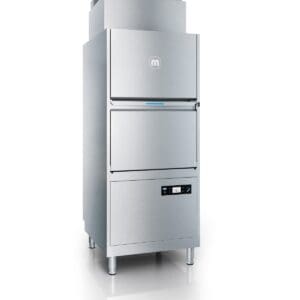
Utensil Washers
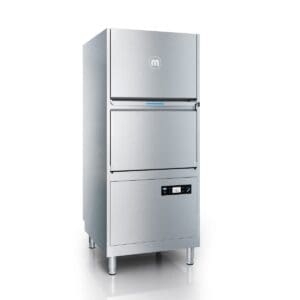
Utensil Washers
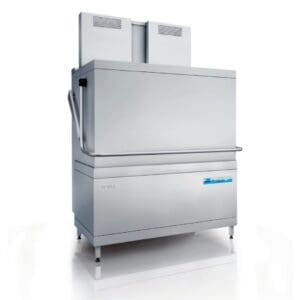
Utensil Washers
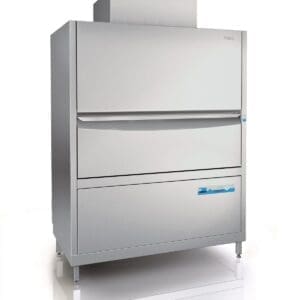
Utensil Washers
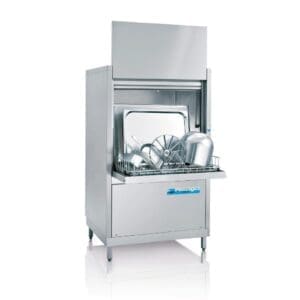
Utensil Washers
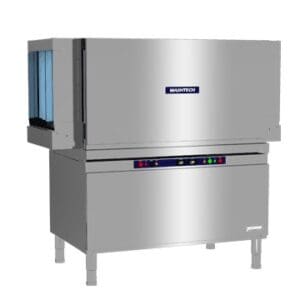
Rack Conveyor, Utensil Washers
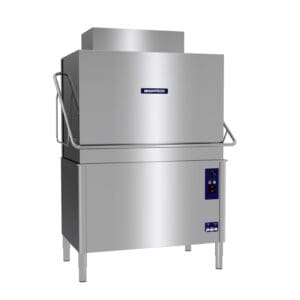
Utensil Washers
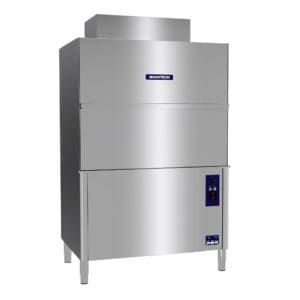
Utensil Washers
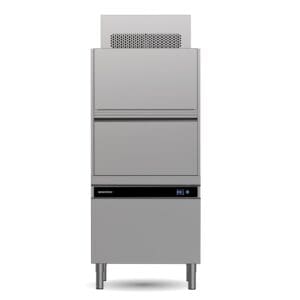
Utensil Washers
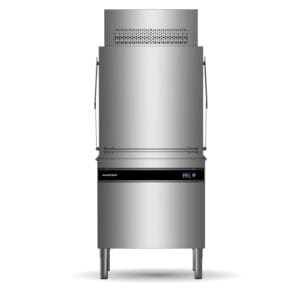
Utensil Washers
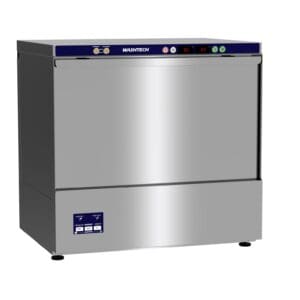
Utensil Washers
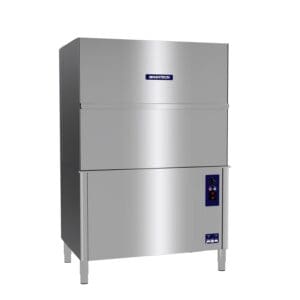
Utensil Washers
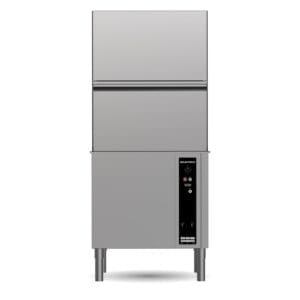
Utensil Washers
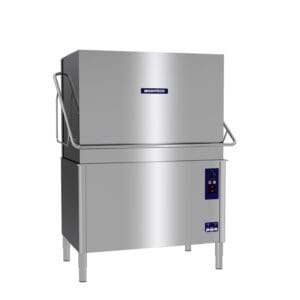
Utensil Washers
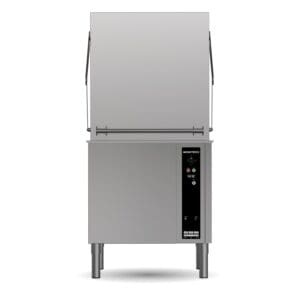
Utensil Washers
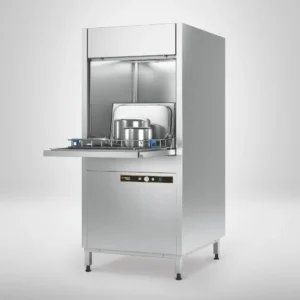
Utensil Washers
A utensil washer is bought to take the pot sink off your staff. Everything else follows from one question: does your largest item physically fit inside it?
Manufacturers publish usable internal width, depth and height, and separately a clear entry height — the gap the item has to pass through with the door open. The two are not the same, and the entry height is what catches people out. Measure your tallest stockpot, your largest bratt-pan insert and your longest baking sheet, then check them against those figures rather than the external dimensions. Standard gastronorm containers, GN 1/1 and smaller, go through everything here; full baking sheets and tall vessels need a large chamber and a high entry. Twin-chamber machines give you two smaller loads instead of one large one, which suits a kitchen returning pots steadily through service rather than in a single hit.
These are floor-standing machines and the larger chambers are three-phase, so the electrical supply is part of the decision, not an afterthought. Compact models are built to sit in about a square metre of floor, which is often what makes a pot washer possible in an existing kitchen. Confirm the door swing as well: a counter-sprung split door or a fold-down door needs different clearance from a full-height single door, and a fold-down door also gives you a surface to slide a heavy pot in from.
Utensil washers are rated in cycles per hour rather than racks, because the loads are slower and heavier. Typical programmes are a short cycle for lightly soiled items, a standard cycle, an intensive cycle for baked-on residue, a continuous or permanent programme for a steady stream of pots, and a hygiene cycle. Some machines add a soaking programme that loosens burnt-on residue in the chamber, which is the feature that actually removes hand-scrubbing before loading. Look at the wash arms too: bidirectional or oscillating arms that change direction during the cycle get behind the shapes a fixed spray pattern misses.
These machines hold a heated wash tank and reuse it across cycles, topping up with fresh rinse water each time, so the figure to compare is fresh water per cycle rather than tank volume. Multi-stage filtration and scrap trays keep the tank clean between changes, and a fast water-exchange function lets you dump and refill the tank in steps when a heavy load has fouled it. Detergent and rinse aid dose automatically from built-in pumps with refill signals, and an automatic self-clean when the tank drains means the machine is flushed at close rather than left to your staff. A drain pump gives you freedom in where the machine sits.
A large chamber releases a lot of vapour when the door opens. Heat recovery channels that vapour back into the water cycle instead of into the kitchen, and vapour-stop systems condense it before the door is opened. Both cut the energy draw and the humidity around the wash-up, and both are worth pricing against the cost of extra extraction over the machine.
Hobart covers single and twin-chamber front-door utensil washers and a high pass-through model, with optional exhaust heat recovery and vapour-stop, refill signals and a self-cleaning programme. Winterhalter runs medium, large and extra-large chambers, each offered in a heat-recovery version, with a soaking programme and multi-stage filtration. Meiko is German-made and covers compact machines with a small footprint and heat recovery through to large pot washers with high entry heights for crates and oversized vessels. For smaller ware see undercounter dishwashers, pass-through dishwashers and glasswashers.
Our team has 35 years specifying warewashing into banquet kitchens, bakeries, hospitals, aged care and high-volume catering across Queensland and Australia. Both showrooms are open to the public — Brisbane (Springwood) and Gold Coast (Bundall). Ring first on 1300 CKC 000 and we will tell you what is on the display floor, so you can look at rack size, entry height and controls in person. SilverChef equipment finance is available on eligible equipment, and delivery, installation arrangement, plumbing, drainage and electrical connection can be quoted alongside the machine.
Utensil washers have larger internal cavities to accommodate full-size baking trays, GN pans, and large pots that don't fit in standard dishwashers. They also include more aggressive wash cycles for baked-on residue. Regular dishwashers prioritise plate and glass capacity; utensil washers prioritise large-item capacity.
Match cavity dimensions to your largest utensil. Standard models accommodate full-size GN1/1 pans (530×325mm). Larger units handle full baking trays (650×450mm). Bakeries with very large trays may need specialised units. Always measure your largest utensil before purchase — cavity dimensions are non-negotiable.
Modern utensil washers use 2-4 litres of water per cycle through recirculation systems. Older units use 6-10L per cycle. For a high-volume operation running 40-60 cycles per shift, that's 480-1,400L per day difference between modern and old units — significant cost impact over a year.
Yes — quality utensil washers include intensive cycle programs specifically for baked-on residue on baking trays, roasting pans, and combi oven GN pans. These cycles use higher temperatures and longer durations than standard wash cycles. Heavily-soiled items may require pre-soaking for best results.
Utensil washers require hot water supply (60-65°C), cold water for booster, drain connection (200mm minimum), and dedicated electrical (typically 32-40A 3-phase for larger units). Most units include chemical dosing requiring chemical supply lines. Always engage qualified trades for installation.
Yes — Commercial Kitchen Company partners with SilverChef for Rent-Try-Buy, lease, and hire purchase on every utensil washer. SilverChef offers weekly payment plans designed around hospitality cash flow. Quote finance alongside delivery, installation arrangement, plumbing, and electrical connection in a single package.

Commercial Kitchen Company is the go-to source for high-quality hospitality supplies and equipment in Australia. As a proud, Australian-owned business, we cater to a diverse range of hospitality needs, including restaurants, cafes, catering services, and hotels in Brisbane and the Gold Coast. Our extensive selection in our showrooms highlights everything from advanced commercial kitchen equipment to essential front-of-house products, all aimed at enhancing the efficiency and appeal of your business.