Oil is one of the most expensive consumables in a commercial kitchen, and how you clean the fryer decides how long that oil lasts. A dirty fryer also browns food unevenly, carries flavours between batches, and builds up the carbon and old oil that make fryers a fire risk.
We went through the operating manuals for fryers from Frymaster, Pitco, Dean, Waldorf, Roband and Woodson. They agree on the principles and disagree on the details, so the first rule is simple: follow the manual for your model. This guide covers what the manufacturers have in common, where they differ, and the safety rules none of them bend. It is general information, not a substitute for your fryer’s instructions.
If you run a busy fry station, dedicated oil filtration equipment makes the daily filter quicker and safer than hand-draining into buckets. The Waldorf 800 Series Filtamax units, for example, are mobile filters on castors with a reversible pump and a reusable filter bag.
The manuals are consistent about what shortens oil life:
Replace oil that smokes, foams, darkens heavily or turns gummy. Old oil is more than a quality problem: Pitco, Roband and Woodson all warn that it has a lower flash point and is prone to surge boiling.
Daily filtering removes crumbs. It doesn’t remove the layer of old, hardened oil that bakes onto the walls of the pot. A boil-out does: you heat water and a fryer cleaner in the empty pot to lift it off.
The steps below are common to the manuals we reviewed. The temperatures, times and products vary by model, so check yours at each step.
To show how much procedures differ, here is what the manuals we reviewed specify for the heating, timing and rinse steps.
| Fryer (manual) | Water temperature | Time | Neutralising rinse |
|---|---|---|---|
| Waldorf Fast-Fri gas | Approx. 80–90°C | Soak 5–10 min (or as the cleaner directs) | 1 part vinegar to 15 parts water (or weaker, up to 1:25) |
| Pitco Solstice gas | Boil mode (93°C on digital controls); bring to a simmer, never a boil | Simmer 1 min, then soak 15–30 min with the fryer off | None specified |
| Frymaster 1814 gas | Set 107°C, reset to 93°C as it nears the boil | Simmer about 45 min | Fresh water and vinegar (no ratio given) |
| Frymaster H14 electric | 93°C | Simmer 45–60 min | None specified |
| Dean Super Runner gas | Bring to a boil | Simmer 10–15 min | ¼ cup white vinegar in the last rinse |
| Roband Frypod and Woodson countertop | No boil-out procedure | n/a | n/a |
The differences are real. Pitco says the water should never be allowed to boil because it can splash over; Dean says to bring it to a boil. Some manuals use vinegar to neutralise the cleaner and others don’t mention it. None of them is wrong for its own fryer, which is exactly why you shouldn’t borrow one brand’s settings for another.
For a busy commercial fryer, weekly is the most common recommendation: Waldorf, Dean and the Frymaster 1814 manual all say weekly, with Waldorf adding more often if usage is very high. Pitco’s Solstice and SELV manuals say monthly, and more often for heavy or battered frying. One older Frymaster manual ties the boil-out to every oil change.
Our equipment maintenance checklist schedules a weekly boil-out alongside daily filtering. Adjust it to your manual and your volume.
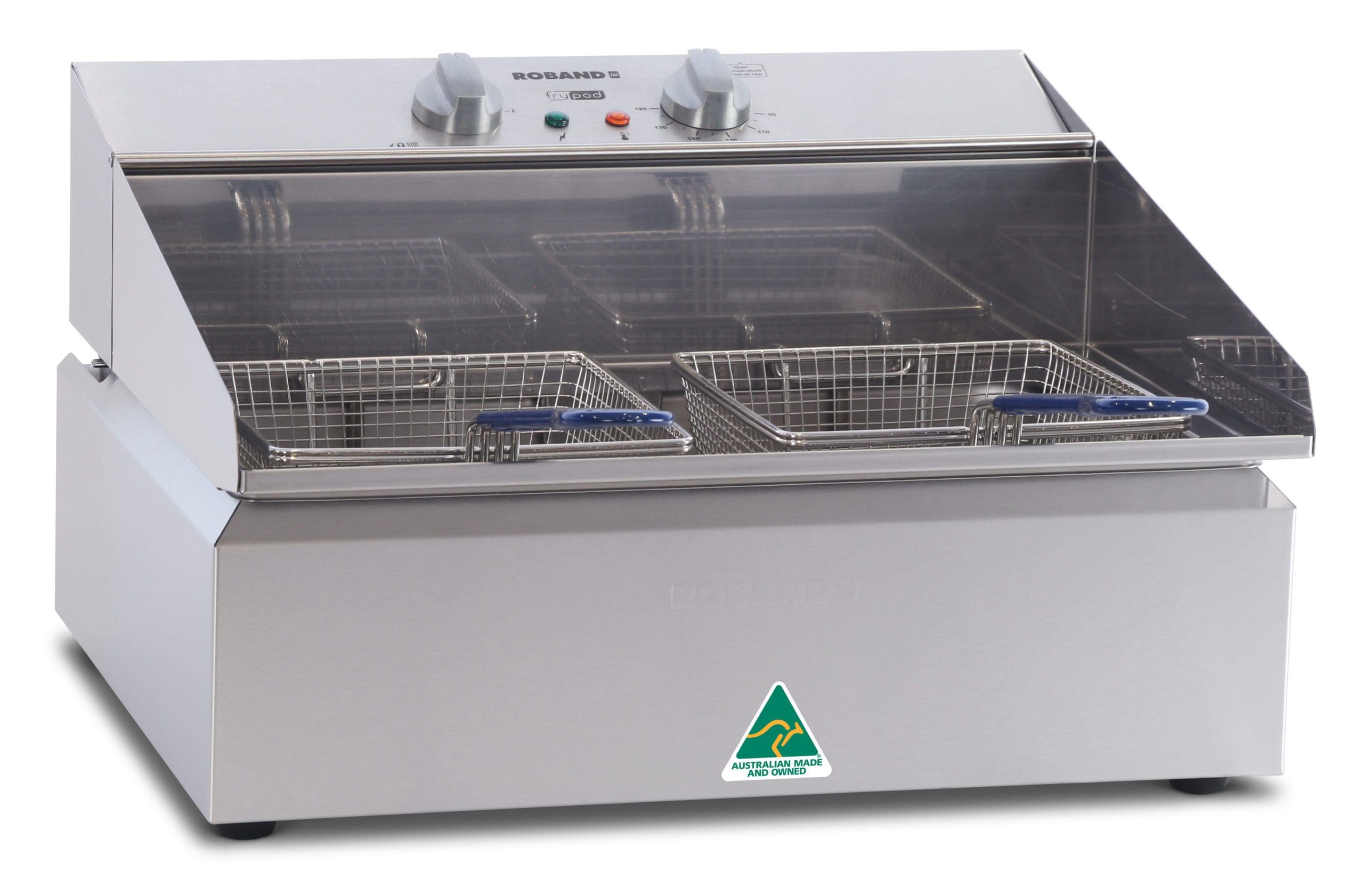
Countertop units are not built for a boil-out. The Roband Frypod and Woodson countertop manuals give no boil-out procedure. Both say the fryer must be cleaned daily, is not waterproof, and must never be hosed down or immersed. Both also rule out caustic and abrasive cleaners.
Roband’s manual also warns that immersing a hot element in oil could cause a fire, so follow its cool-down instructions whenever you remove or refit the element. Browse our bench fryers for countertop models.
Electric fryers often have elements that tilt up for cleaning, which gives you easy access to the pot. Lower them again before a boil-out so they sit under the water, never drain with the power or elements on, and dry the elements as well as the pot.
Gas fryers need the burner tubes scrubbed during the boil-out and kept under the water. The flue area runs very hot and collects grease, so keep it clean and don’t bang baskets against it. Pitco’s Solstice manual includes a weekly flue check, and burners and flues should be inspected by a qualified technician: Waldorf says every six months, Frymaster at least annually.
Across the manuals and the WorkSafe guidance, the same rules come up again and again:
WorkSafe WA also recommends writing a safe work procedure for operating and cleaning your fryers, based on the manufacturer’s instructions. Put it on the wall next to the fry station.
Standard 3.2.2 of the Food Standards Code requires equipment to be kept free of built-up grease, food waste and dirt, with food-contact surfaces clean and sanitary, and equipment in good repair and working order. There’s no fryer-specific clause, but a fryer caked in carbon fails the general rule. Our guide to commercial kitchen requirements in Australia covers the wider compliance picture.
If the pot is pitted, the thermostat won’t hold temperature, or the oil breaks down in days no matter how well you look after it, it may be time to replace the fryer. Browse our commercial fryers, including Frymaster and Pitco models. SilverChef finance is available if you’d rather spread the cost.
Talk to Commercial Kitchen Company in Brisbane (1/1 Carol Avenue, Springwood) or on the Gold Coast (88 Upton Street, Bundall), call 1300 CKC 000, or get in touch.
This guide summarises manufacturer and WorkSafe guidance as at October 2026 and is general information only. Always follow the operating manual for your fryer model and your own safe work procedures.


Commercial Kitchen Company is the go-to source for high-quality hospitality supplies and equipment in Australia. As a proud, Australian-owned business, we cater to a diverse range of hospitality needs, including restaurants, cafes, catering services, and hotels in Brisbane and the Gold Coast. Our extensive selection in our showrooms highlights everything from advanced commercial kitchen equipment to essential front-of-house products, all aimed at enhancing the efficiency and appeal of your business.